Loading and unloading operations are an important part of warehouse, distribution center, and industrial facility management. When there is a height difference between a loading dock and a truck trailer, forklifts and pallet trucks need a safe and stable transition. This is where a mechanical dock leveler plays an important role.
A mechanical dock leveler creates a bridge between the loading dock and the vehicle bed, allowing material handling equipment to move smoothly between the warehouse floor and the truck. Compared with temporary ramps or dock plates, a properly installed dock leveler provides a more consistent loading solution for facilities with regular truck traffic.
In this article, we will explain how mechanical dock levelers work, their main benefits, and what to consider when choosing a system for a warehouse or distribution facility.
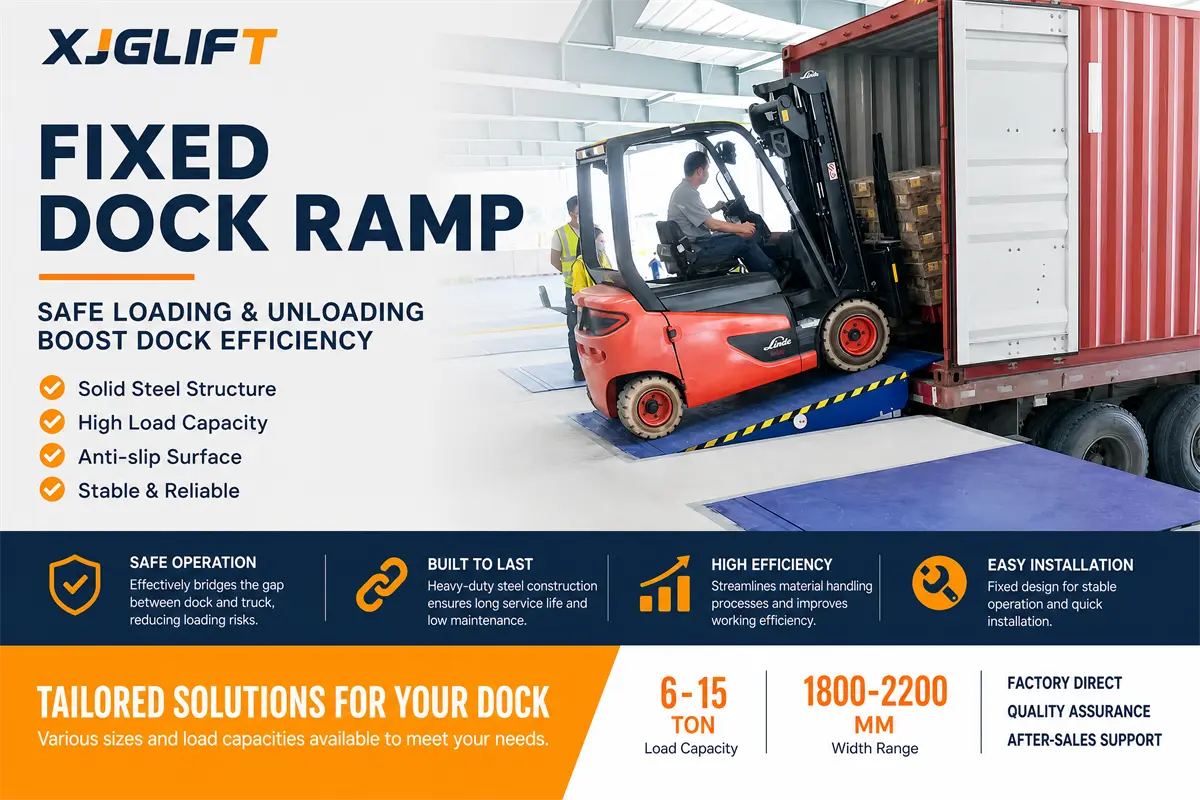
What Is a Mechanical Dock Leveler?
A mechanical dock leveler is a loading dock device installed at the edge of a warehouse dock. It uses mechanical components, typically including springs, a deck, lip, and operating mechanism, to compensate for the height difference between the dock and a truck trailer.
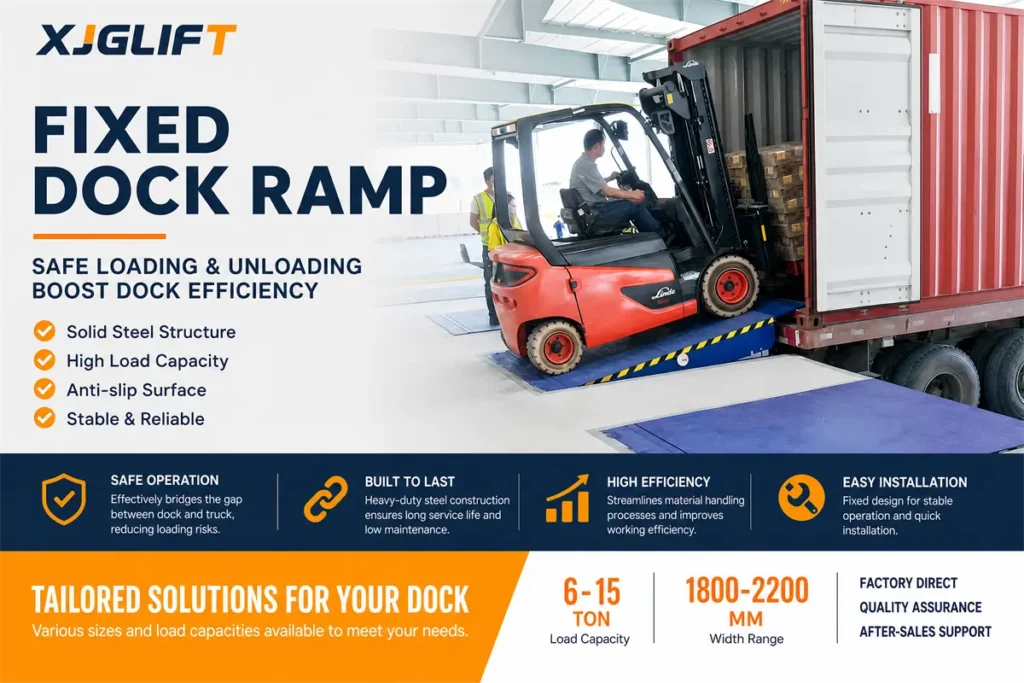
When a vehicle arrives at the loading bay, the dock leveler deck can be positioned to create a continuous loading surface. The lip extends toward the truck bed, forming a bridge that allows forklifts and pallet trucks to travel between the dock and trailer.
Unlike a simple mechanical dock plate, which is generally a removable or lightweight bridging device, a dock leveler is normally integrated into the loading dock structure and is designed for repeated loading operations.
How Does a Mechanical Dock Leveler Work?
The basic operating principle is relatively simple.
First, the truck is positioned at the loading dock. The operator activates the mechanical release or operating system, allowing the dock leveler’s deck to rise. Once the deck reaches the required position, the lip extends toward the trailer.
The deck then settles onto the trailer floor, creating a relatively smooth transition between the warehouse and vehicle.
When loading or unloading is complete, the operator returns the deck to its stored position.
The exact operating mechanism varies by design, but a mechanical system generally does not require an external hydraulic power unit or electrical drive system. This can make it attractive for facilities looking for a straightforward dock solution.
1. Reliable Loading Dock Access
One of the main benefits of a mechanical dock leveler is that it provides a consistent connection between the warehouse floor and truck.
Truck beds are not always positioned at exactly the same height. Trailer suspension, vehicle type, cargo weight, and loading conditions can all affect the difference between the truck bed and dock.
A dock leveler can compensate for these variations within its operating range, helping forklifts and pallet trucks move across the loading area more effectively.
For warehouses handling multiple types of vehicles, this flexibility can be particularly useful.
2. Improves Forklift and Pallet Truck Movement
A large gap or height difference between a loading dock and trailer can make material handling more difficult.
Without an appropriate transition, forklift operators may need to use additional equipment or work around an uneven loading surface. A properly designed mechanical leveler creates a continuous bridge between the two surfaces.
This can help improve the movement of:
- Forklifts
- Pallet trucks
- Hand trucks
- Warehouse carts
- Wheeled material handling equipment
The actual capacity and operating range should always be selected according to the equipment being used and the expected loading conditions.
3. Supports Frequent Loading Operations
Distribution centers and industrial warehouses may handle dozens or even hundreds of truck movements during busy periods.
For these facilities, a permanent loading dock solution is generally more practical than repeatedly positioning temporary equipment.
A mechanical dock leveler is installed as part of the loading bay and can be operated whenever a suitable vehicle arrives. This makes it suitable for warehouses where loading and unloading are regular activities.
For high-traffic facilities, the leveler should be selected based on expected usage frequency, rated capacity, vehicle types, and operating environment.
4. Mechanical Design Without Hydraulic Power
Another reason some warehouses choose a mechanical system is its relatively straightforward operating principle.
A mechanical dock leveler does not depend on a hydraulic power pack to raise and lower the deck. Instead, mechanical components provide the necessary movement.
This can be useful in facilities where operators prefer a system with fewer powered components.
However, this does not mean maintenance can be ignored. Springs, hinges, structural components, lip mechanisms, and other moving parts still require inspection and maintenance according to the manufacturer’s recommendations.
5. Suitable for Pit-Mounted Installation
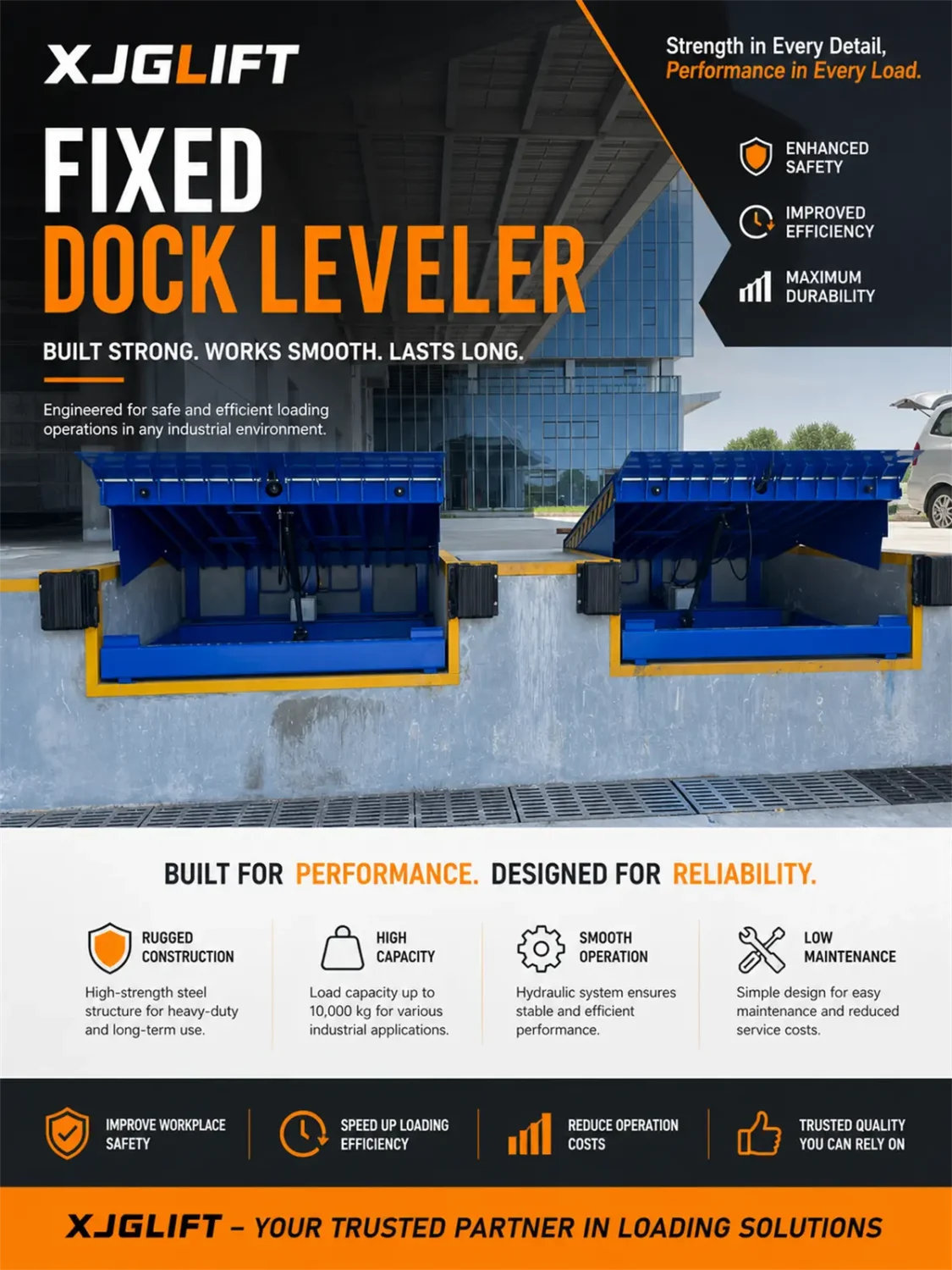
Pit levelers, also commonly referred to as pit style dock levelers, are installed in a recessed area or pit constructed at the loading dock.
The pit allows the deck to sit within the dock structure rather than occupying significant space on the warehouse floor.
A typical pit-style installation includes:
- Dock leveler deck
- Hinged lip
- Mechanical operating mechanism
- Side frames or structural supports
- Maintenance supports
- Pit structure
- Dock bumpers and related loading dock components
The exact pit dimensions depend on the dock leveler model and installation requirements.
Because installation conditions can vary between warehouses, the pit should be prepared according to the manufacturer’s technical drawings rather than using a generic dimension.
6. Helps Improve Loading Dock Safety
Safety is an important consideration whenever forklifts and workers move between a building and a truck.
A properly selected dock leveler helps reduce the height difference and provides a more controlled transition between the dock and trailer.
Safety features and procedures may include:
- Mechanical safety maintenance supports
- Trailer restraint systems
- Dock bumpers
- Properly designed lip
- Load-rated deck construction
- Anti-slip deck surfaces
- Regular inspection and maintenance
A dock leveler should never be treated as a substitute for proper loading dock safety procedures. Operators should follow the manufacturer’s instructions and workplace safety requirements.
Mechanical Dock Leveler vs. Mechanical Dock Plate
Although the terms are sometimes used interchangeably, a mechanical dock leveler and a mechanical dock plate are not necessarily the same type of equipment.
A dock plate is generally a simpler bridging device placed between the dock and trailer. It may be manually positioned and is often used for applications with relatively straightforward loading requirements.
A dock leveler is normally integrated into the loading dock and provides a more controlled method of compensating for trailer height differences.
The choice depends on factors such as:
| Factor | Mechanical Dock Leveler | Mechanical Dock Plate |
|---|---|---|
| Installation | Usually integrated into dock | Usually portable or simpler |
| Height adjustment | Designed for dock-to-trailer differences | More limited |
| Traffic frequency | Suitable for regular loading | Often suitable for lighter applications |
| Forklift operation | Commonly used | Depends on design and capacity |
| Space requirement | Requires dock installation | Generally less permanent |
| Long-term loading operations | Suitable | Application dependent |
The right solution should be based on actual vehicle traffic, load requirements, dock configuration, and operating conditions.
What Is a Mechanical Pit?
The term mechanical pit generally refers to the recessed area prepared in a loading dock for installing a pit-mounted mechanical dock leveler.
The pit allows the dock leveler to be positioned at dock-floor level when it is not in use.
For new warehouse construction, the pit can be incorporated into the original dock design. For existing facilities, the installation may require modification of the concrete structure.
Before ordering a pit-style dock leveler, buyers should confirm:
- Pit length and width
- Pit depth
- Dock height
- Trailer bed height
- Required vertical travel
- Required capacity
- Lip length
- Deck dimensions
- Installation method
Accurate measurements are important because an unsuitable pit configuration can cause installation and operating problems.
How to Choose the Right Mechanical Dock Leveler
Choosing a dock leveler should start with the actual loading conditions rather than simply selecting the largest available model.
1. Determine the Required Capacity
Consider the combined weight of the forklift, pallet truck, cargo, and any other loads that may be transferred across the deck.
For example, a forklift carrying a heavy pallet can impose significantly more load than an empty pallet truck.
The rated capacity of the dock leveler should provide an appropriate margin for the intended application.
2. Check the Dock and Trailer Heights
Measure the fixed dock height and the typical trailer bed height.
You should also consider the highest and lowest vehicle heights expected at the facility. This information determines the required operating range of the dock leveler.
3. Consider Loading Frequency
A warehouse with occasional deliveries may have different requirements from a large distribution center operating continuously.
The expected daily cycles should therefore be considered when selecting the construction, mechanism, and maintenance requirements.
4. Select the Correct Installation Type
For a new warehouse or a dock with a suitable recess, a pit style dock leveler can provide an integrated solution.
Other loading dock configurations may require different installation methods. The available space and existing concrete structure should be checked before purchasing.
Maintenance of Mechanical Dock Levelers
Regular maintenance helps maintain reliable operation and extend equipment service life.
Typical maintenance tasks include inspecting the deck, lip, hinges, springs, operating mechanism, welds, and other structural components.
Operators should also check for:
- Unusual noise during operation
- Damaged springs
- Excessive corrosion
- Loose fasteners
- Deformed deck or lip
- Hydraulic or mechanical damage where applicable
- Problems with the lip extension
- Abnormal movement
Any damaged safety component should be addressed before the equipment is returned to normal operation.
Conclusion
A mechanical dock leveler can provide a practical solution for warehouses, distribution centers, factories, and logistics facilities that regularly load and unload trucks.
Its main advantages include providing a stable transition between dock and trailer, supporting forklift movement, accommodating variations in trailer height, and offering a mechanical operating system without requiring an external hydraulic power unit.
For facilities considering a new loading dock system, terms such as mechanical dock leveler, mechanical dock plate, pit levelers, dock leveler pit, mechanical pit, mechanical leveler, and pit style dock leveler describe different aspects of loading dock equipment and installation.
The most suitable system depends on dock height, trailer dimensions, rated capacity, loading frequency, installation conditions, and the type of material handling equipment used. Taking these factors into account before purchase can help ensure that the dock leveler fits the actual requirements of the facility.